
Removal · Leveling · Moisture · Sleepers
Subfloor Preparation and Floor Leveling
The hidden part of every floor job, done while it can still be reached.
Or call (561) 486-0898 · answered 24/7
- Free on-site estimates
- Led by master installer Alexander, 30 years of experience
- Real photos of our own work
Subfloor preparation
Subfloor preparation decides how the new floor feels
When carpet or an old floor comes out, the base is in the open for the first time in years. That is the moment for subfloor preparation: squeaks, soft spots, dips and damp patches.
Once new planks are down, each of those is hard to reach. A dip becomes a hollow sound. A ridge becomes a joint that clicks, then opens.
In South Florida the base is usually concrete downstairs and plywood upstairs, so we treat the two in different ways.
Step one
Taking out carpet, tile or old hardwood
Carpet
Carpet, pad, tack strips and every staple. One staple left behind can be felt through vinyl.
Old hardwood
Pulled up board by board, with nails cleared so nothing sticks up.
Vinyl and laminate
Floating floors unclick. Glued sheets are scraped, and the old adhesive is dealt with.
Tile
The noisy, dusty one. The mortar below is ground off, or the tile stays if it is flat and tight.
Very old floors can hold asbestos, in tile or in black adhesive. If we suspect it, a lab test comes first. We do not remove asbestos.
Concrete
Leveling and testing a concrete slab
| What we find | What we do |
|---|---|
| High spots | Ground down until a straightedge lies flat |
| Dips and worn areas | Filled with patch, or poured with self-leveling compound |
| Old glue, paint, curing film | Scraped or ground off, so new adhesive can bond |
| Hairline cracks that do not move | Cleaned and filled, so they stay out of the finished floor |
| Damp readings | Adhesive or vapor layer chosen for them, or a different floor |
Flat is not the same as level. A floor can slope slightly and still be flat enough for planks. Makers set a tolerance, for example a small gap under a long straightedge, and we work to it.
Moisture is the quiet problem here. Ground-floor slabs sit on damp soil, and the rainy season is long. We test instead of guessing, because the meter decides which adhesive, and which floor, your slab can carry.
Plywood
Quiet, stiff and flat: wood subfloors upstairs
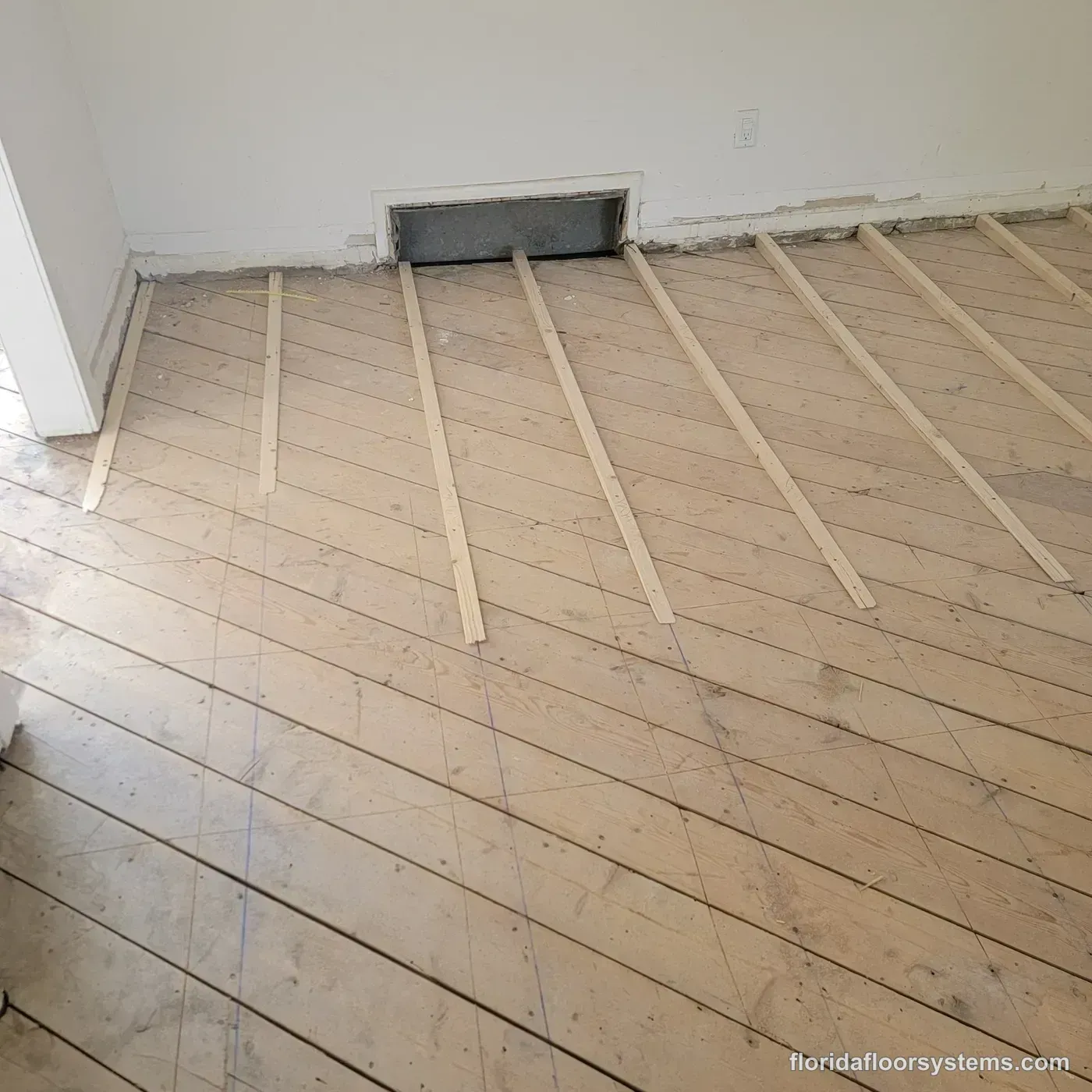
Screw it down. Sheets that have worked loose are screwed into the joists. It is one of the simplest ways to get a quiet floor.
Flatten it. High seams are sanded or planed, and low areas filled. If sheets are soft or water-damaged, we stop and show you, so the right licensed trade can replace them before the new floor goes down.
Add a layer. A thin or tired subfloor can be covered with new plywood. That gives a fresh surface for nail-down or glue-down floors.
On an old plank floor, strips or plywood bridge the boards, so the new floor does not follow their gaps.
Sleepers
Sleeper subfloor over concrete
A sleeper subfloor is a wood frame on the slab, covered with plywood. It turns uneven concrete into a flat wood base.
- 1
Check height
Doors, stairs, sliding tracks and the rooms next door come first.
- 2
Stop the damp
A vapor barrier goes between the slab and the wood.
- 3
Set sleepers
Treated or protected wood, shimmed to one flat plane and fastened.
- 4
Fill or leave
The space between can take insulation, or stay as air.
- 5
Cover
Plywood glued and screwed on top, joints staggered.
It is used where a slab is far out of flat, or where someone wants a nailed floor over concrete. It also softens the step. The price is height, and a ground-floor slab still needs a dry base.
Where height is short, a thin dimpled membrane or a direct glue-down floor can be the better answer.
In practice
From prepared base to finished floor
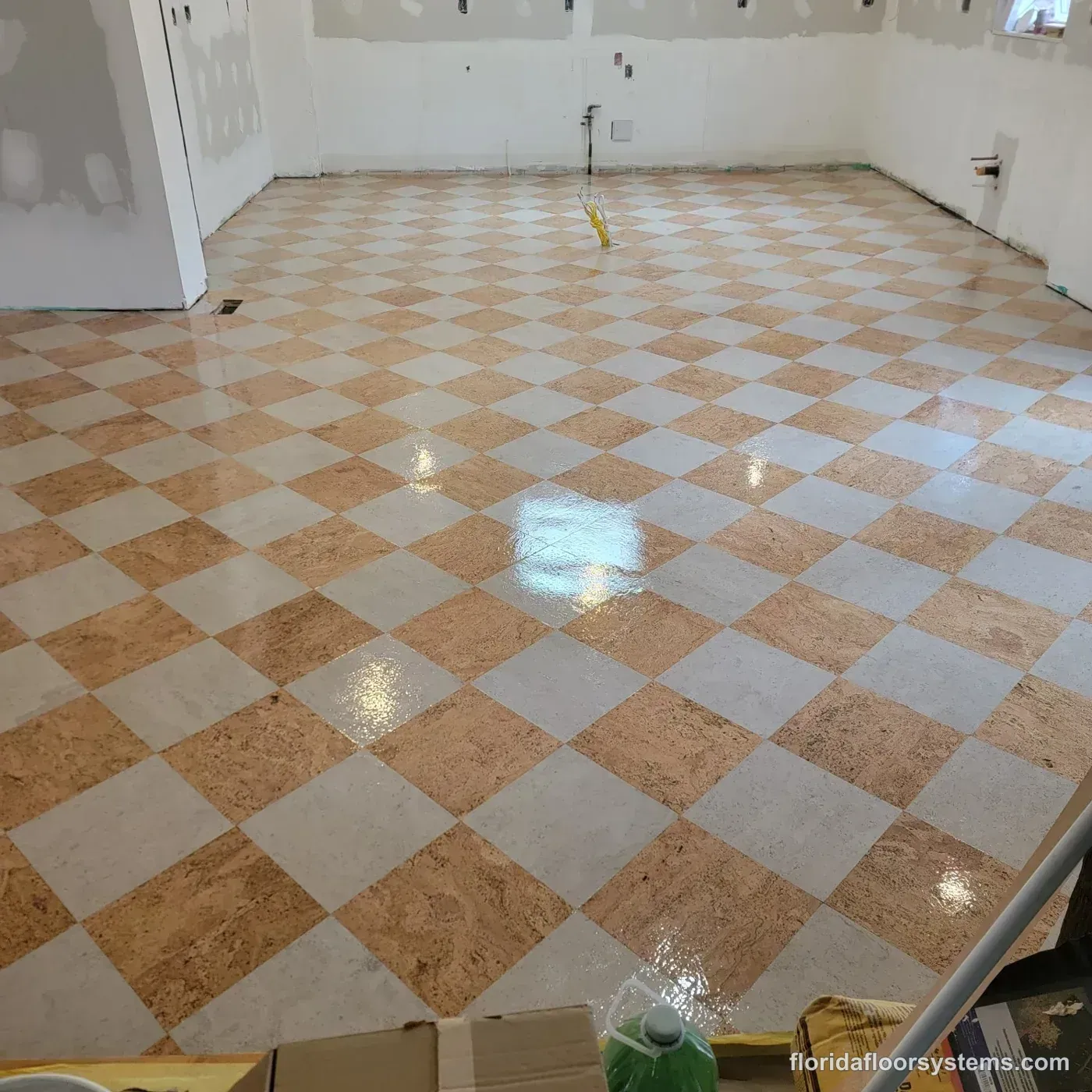
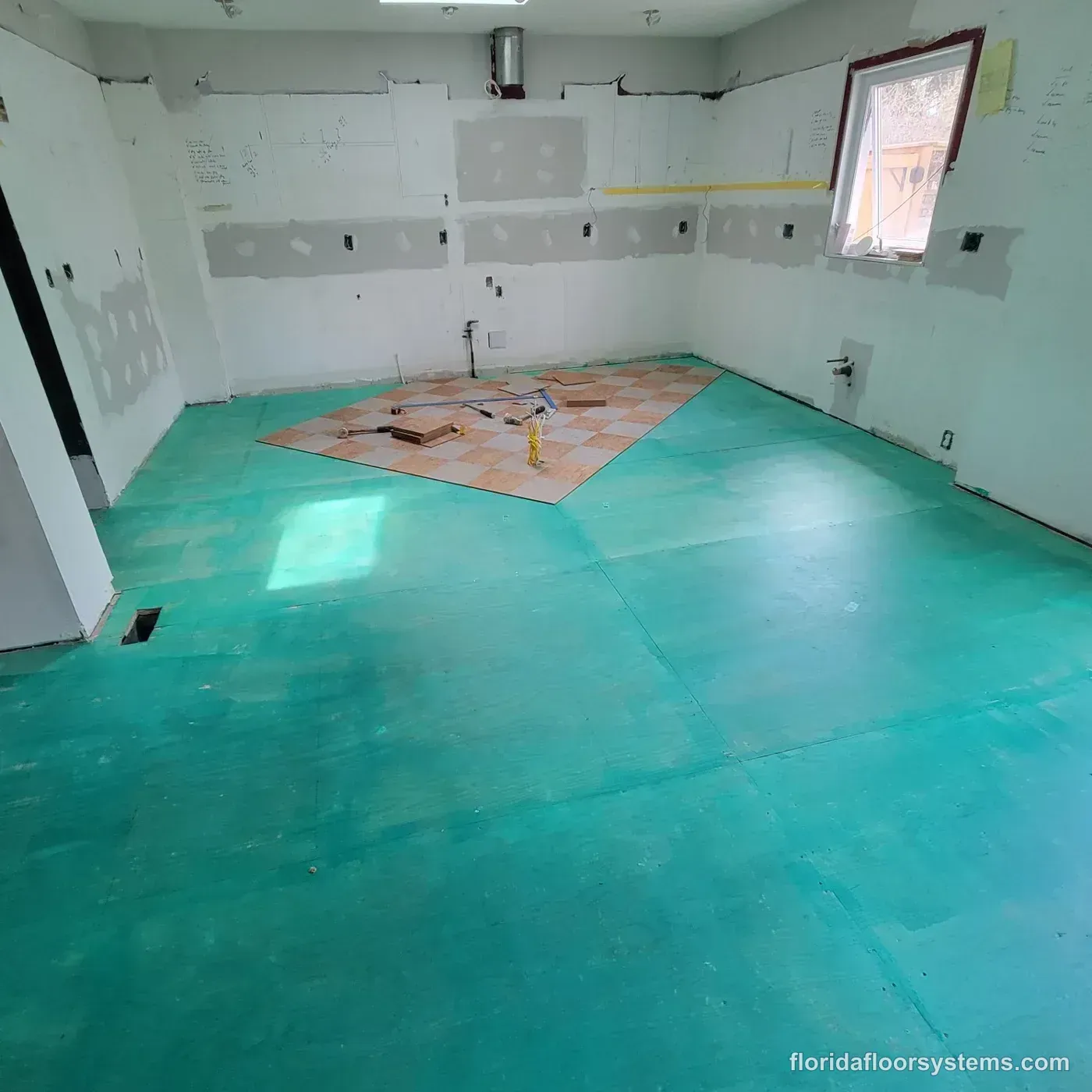
The photo at the top of this page and this one show the same room. First the prepared base with the first cork tiles, then the finished checkerboard.
In your quote, prep stands on its own lines: removal, disposal, grinding, filling, plywood, tests. If the old floor hides something, we show you and agree on it before we go on.
New installations come with a 12-month warranty on our installation labor, and a sound base is what keeps that floor quiet.
Subfloor questions
Is subfloor preparation always needed?
Some almost always is. How much depends on what shows up when the old floor comes out.
Why does my floor squeak?
Most squeaks come from loose subfloor sheets or from boards rubbing on nails. Screwing the sheets to the joists fixes most of them.
Can a new floor go over the old one?
Sometimes, if the old floor is flat and firmly attached and the added height works at doors and stairs.
How much height does a sleeper subfloor add?
It depends on the sleepers and the plywood. We measure on site, before anything is decided.
Can I put solid hardwood over a sleeper subfloor?
Above ground level it can work, with moisture and height checked first. On a ground-floor slab, engineered hardwood stays the safer choice.
Do you repair cracked slabs or rotten joists?
No. We prepare surfaces. If we see a moving crack or damaged framing, we stop and tell you, so the right professional can look first.
Free quote
Planning a new floor?
Send photos of the old floor, the rooms and the floor you want. Say if you feel dips, bounce or squeaks.
- Free on-site estimate
- Written quote with clear options
- Based in Boca Raton
- Calls answered 24/7
- Led by master installer Alexander, 30 years of experience