
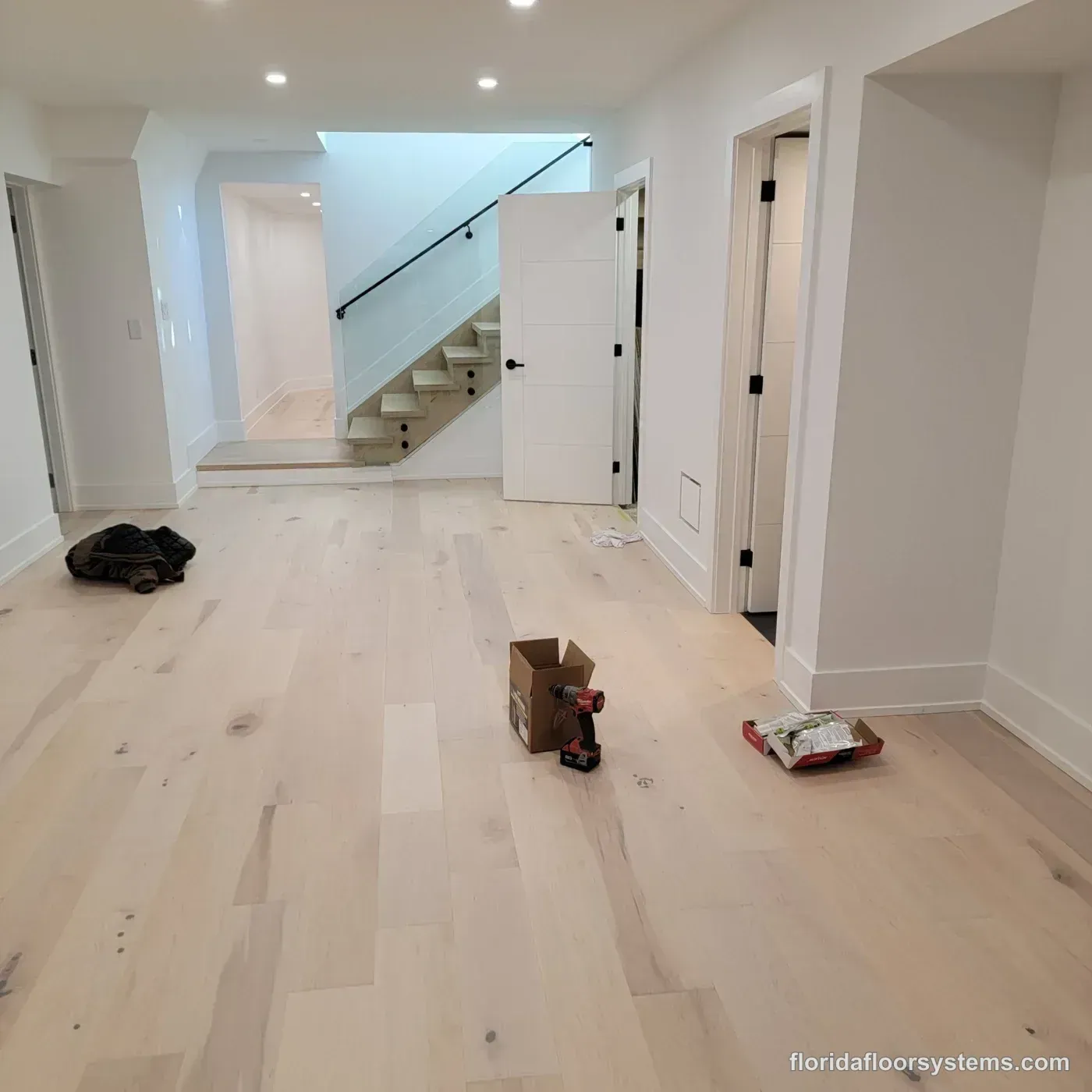
Glue-down · Floating · Glue assist
Engineered Hardwood Flooring: Glue-Down, Floating or Nailed
A real wood surface that can live on a South Florida slab, with the method matched to the exact product.
Or call (561) 486-0898 · answered 24/7
- Free on-site estimates
- Led by master installer Alexander, 30 years of experience
- Real photos of our own work
Engineered hardwood
Engineered hardwood flooring for the way homes are built here
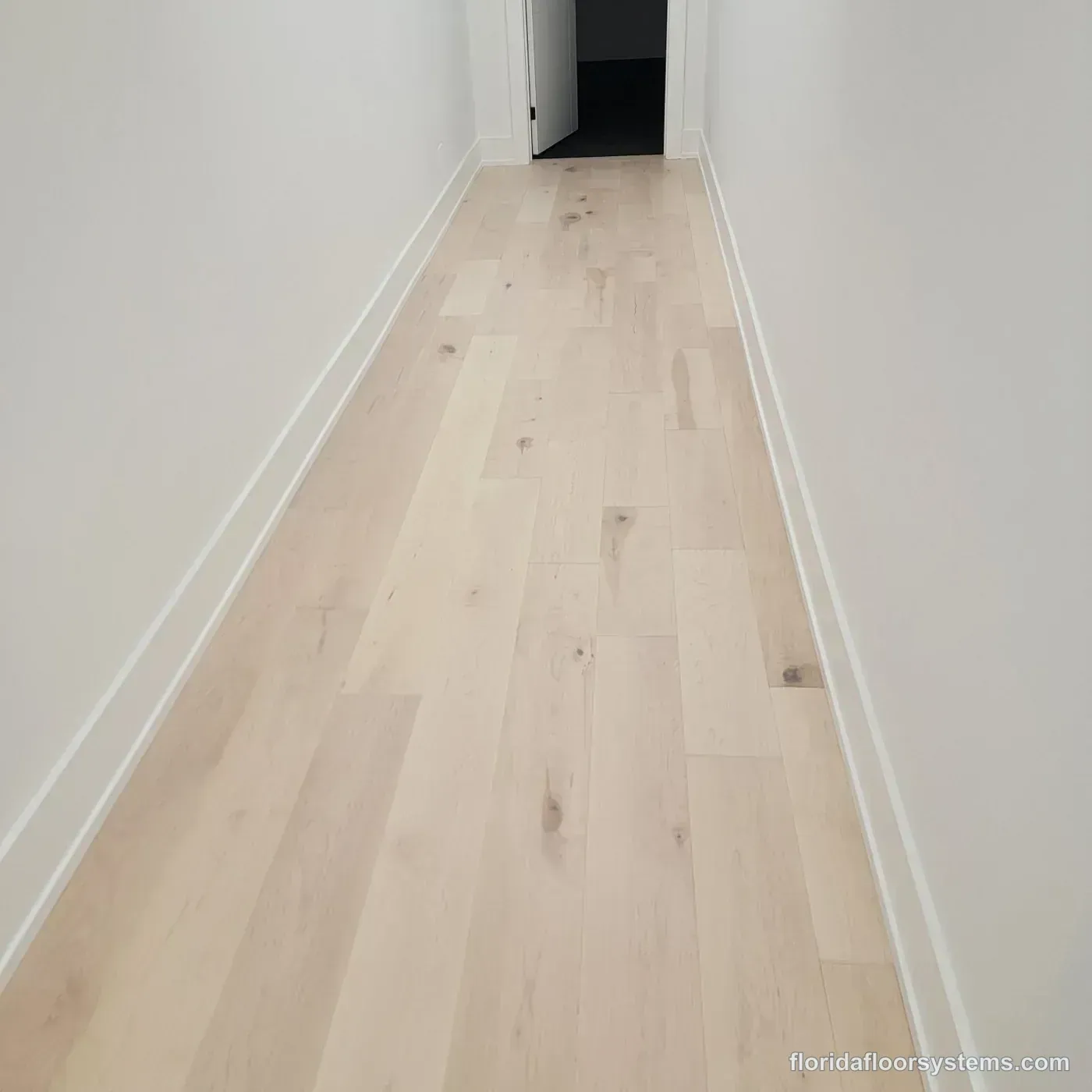
Engineered hardwood has a real wood top over a core of cross-laid layers. The layers hold each other back, so the plank moves far less than a solid board when the air turns damp.
That is why it can go on concrete, the base under most South Florida ground floors and nearly every condo.
Bring a sample or a product link to the visit. Stair nosing, transitions and the space under your doors are easier to solve early.
Three methods
Match the method to the plank and the subfloor
| Method | Goes over | What you notice |
|---|---|---|
| Full glue-down | Concrete or wood, dry and flat | Solid, quiet, very little added height |
| Floating | Concrete, plywood, some sound old floors | Quick and clean, underlayment can help with sound |
| Nailed with glue assist | Plywood or OSB on joists | Feels like a classic hardwood floor |
Not every plank allows all three. In engineered hardwood installation the maker's instructions come first, because the wrong method can void the product warranty. Nailing is explained under hardwood flooring installation.
Glue-down
Full glue-down engineered hardwood on concrete
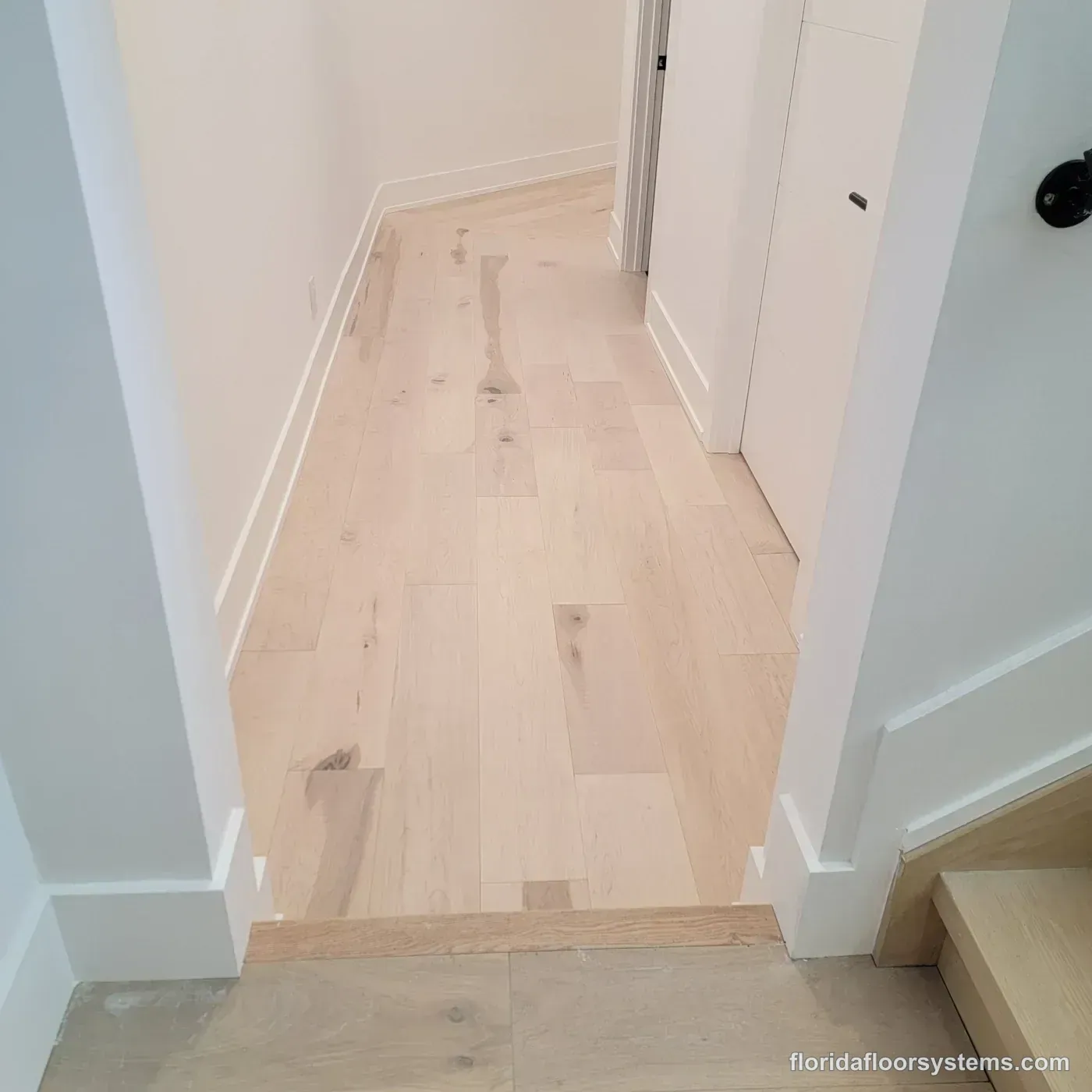
Full glue-down flooring means that every plank sits in full-spread adhesive, over the whole slab.
Moisture testing comes first
Concrete holds moisture, above all on the ground and in newer buildings. We test the slab and choose the adhesive to match the reading. Some urethane and silane adhesives also work as a moisture barrier at the right thickness.
Flat matters more than level
Glued planks follow the slab. A dip shows up as a hollow spot, a hump as an uneven seam. High spots are ground down and low ones filled until the slab meets the maker's tolerance.
Laying and curing
We set out the starting lines, then work a section at a time with the notched trowel the maker calls for. Boards are pressed, and weighted where needed, so the glue makes full contact.
The adhesive maker says when you can walk on it, often the same or the next day. Heavy furniture and appliances wait until the adhesive has cured. That often takes one to two days, depending on the product.
Plank direction
Turning the planks from a hall into a room
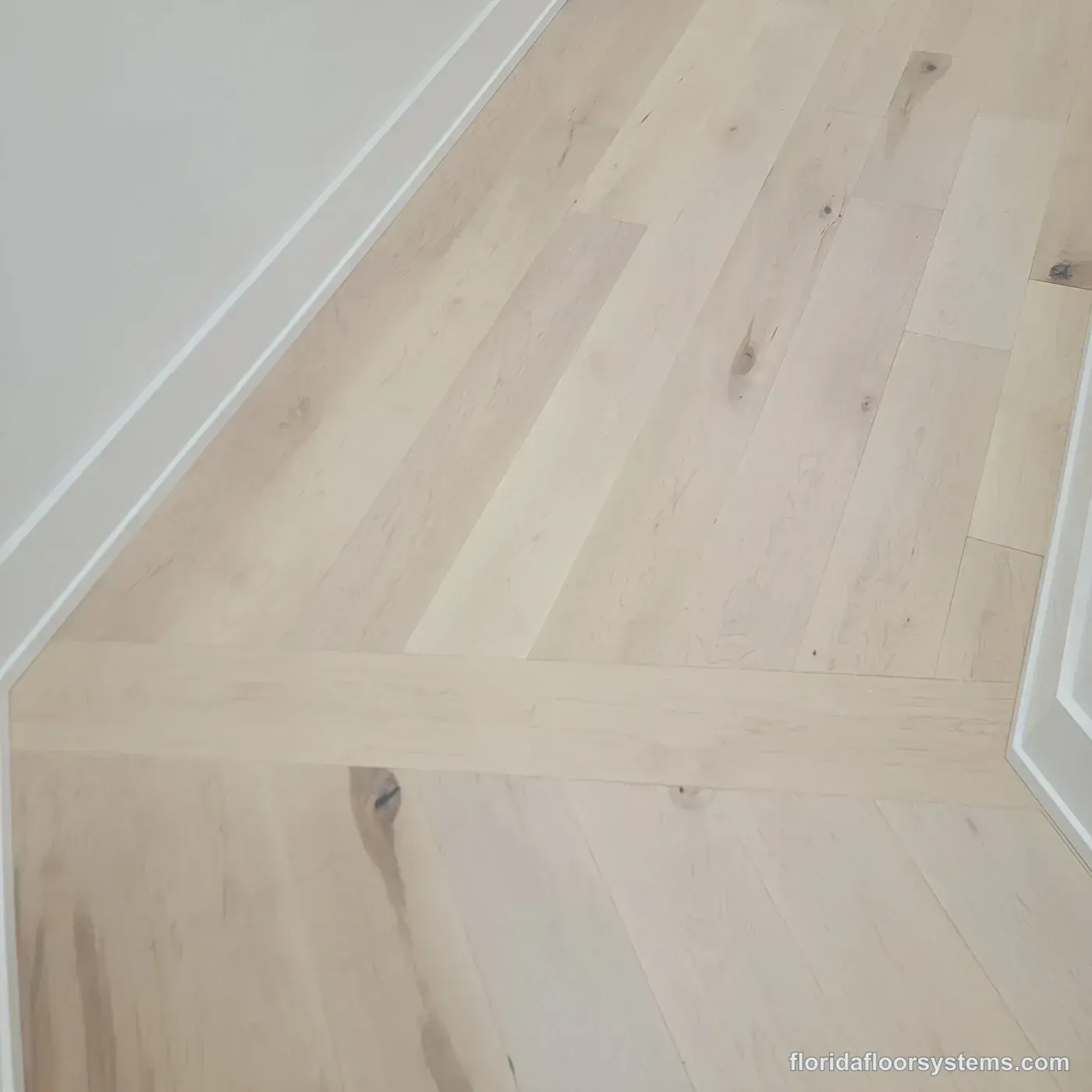
Planks can change direction between a hallway and a room when the layout asks for it. A clean cross board makes the turn look planned.
We also line up stair nosing, door clearances and the height of the floors next door. Dishwashers and closet tracks are measured before the first row, not after the last.
Floating
Floating engineered hardwood over an underlayment
A floating floor is not fixed to the base. Planks click together, or are glued edge to edge, and rest on an underlayment.
Where it works well
Dry slabs, condos that accept floating floors with an approved underlayment, and bases that should not be nailed or glued.
The underlayment
It cushions, evens out tiny flaws and, in some products, adds a vapor barrier and sound control.
Room to move
The floor shifts as one piece with humidity. It needs a gap at walls, pipes and door frames, and sometimes a strip in a wide doorway.
Limits
No islands or heavy cabinets on top. It can sound a little hollower, and a dip in the base makes the joints flex.
Use a product approved for floating. Some click, some need a set edge-glue method, and some may not float at all.
Reading the box
What to compare before you buy planks
- Wood layer: its thickness decides whether the floor can be sanded one day
- Core: it decides stability, and which fasteners hold
- Total thickness: think of door bottoms, sliding tracks and the first stair
- Finish: matte and satin hide sand scratches better than gloss
- Approved methods: if glue, float or nail is missing on the sheet, it is not allowed
- Room limits: some makers rule out baths or rooms without air conditioning
Engineered hardwood questions
Can engineered hardwood be glued straight to a concrete slab?
Many products are approved for it. We read the flooring and adhesive instructions and test the slab before we pick the system.
Is a glued wood floor noisy?
No. It is bonded to the concrete, so it feels solid and has no hollow echo under your heels. Sound to the unit below is a separate question, see condo flooring.
Is a floating hardwood floor real wood?
Yes. The plank has a real hardwood top. Only the way it is installed differs.
Can it be refinished later?
If the wood layer on top is thick enough, often at least once. Very thin layers can only be recoated. More on sanding and refinishing.
Glue-down or floating on a ground floor?
Both work on a dry, flat slab. Glue-down feels firmer. Floating goes in faster and is easier to lift one day.
Free quote
Have a plank in mind?
Send a product link, the room sizes and what is under the floor now. We check the method before you buy.
- Free on-site estimate
- Written quote with clear options
- Based in Boca Raton
- Calls answered 24/7
- Led by master installer Alexander, 30 years of experience