
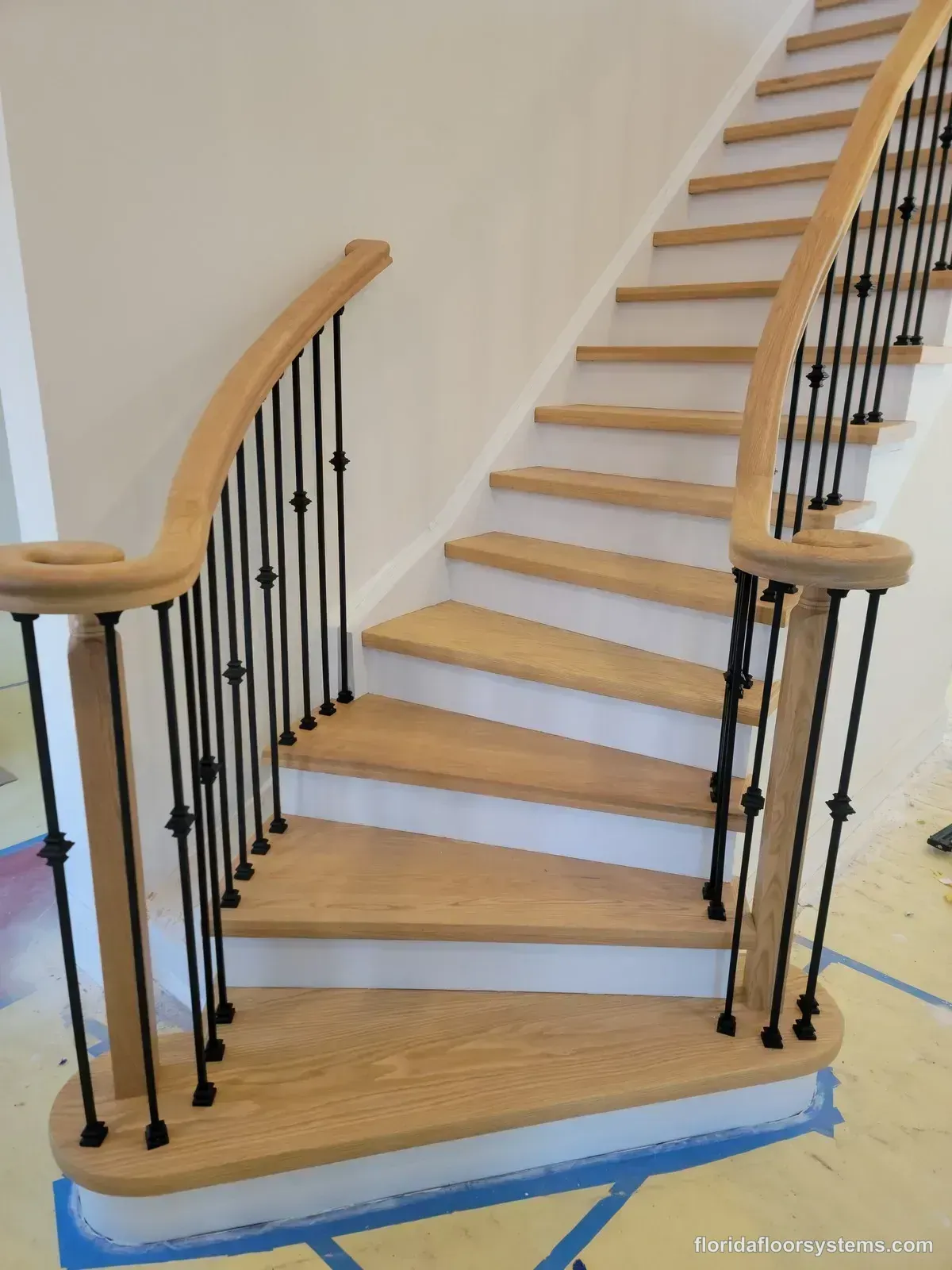
Carpet removal · Recapping · New treads
Carpet-to-Hardwood Stairs
The carpet comes off, the steps are prepared, and solid wood goes on in its place.
Or call (561) 486-0898 · answered 24/7
- Free on-site estimates
- Led by master installer Alexander, 30 years of experience
- Real photos of our own work
Stair renovation
Carpet to hardwood stairs without a new staircase
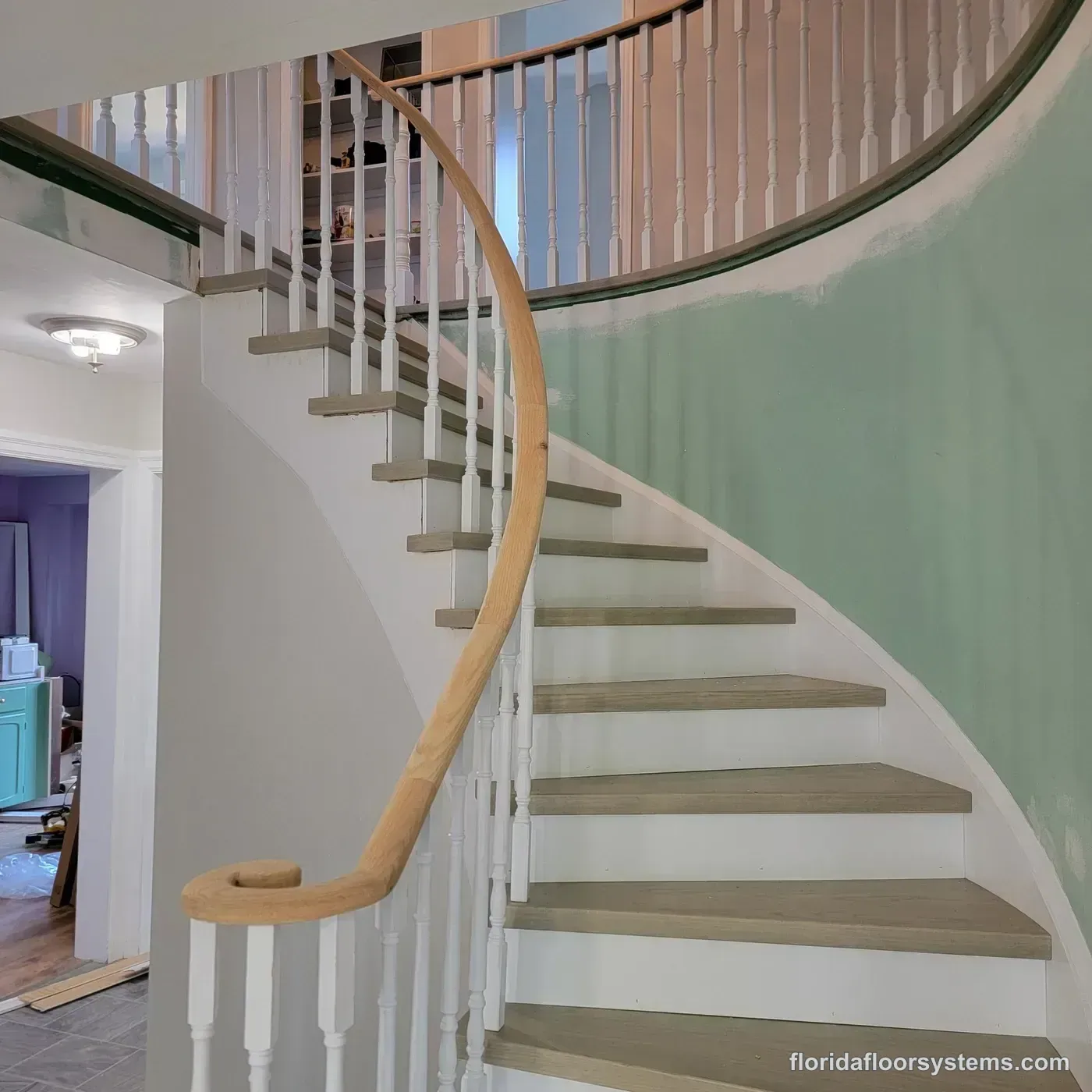
Going from carpet to hardwood is one of the most asked-for stair renovations in a two-story home. In South Florida there is one more reason: carpet on steps holds sand, salt air and damp, and no vacuum gets it all out.
The stair you have can usually stay. Stair recapping gives it the look of a hardwood staircase, one step at a time.
What is under there
What we usually find under stair carpet
Most carpeted stairs were never meant to be seen. Under the pad there are steps of rough pine, plywood or particleboard, with thick rounded fronts.
Now and then there is oak underneath, good enough to sand. Then stair refinishing may be all you need. We lift a corner of the carpet at the visit to find out.
Out come the carpet, the pad, the tack strips and every staple. What is left tells us which way to go.
Two ways
Recap the steps or fit new treads
Stair recapping
The old rounded front is cut back. New solid wood treads and risers go over the steps you have. The stair stays solid, and the work is faster and cleaner.
New treads
Where the step below is sound, damaged treads or old hardwood in the wrong style are taken off and replaced, or capped in the same way.
How we decide
The shape of the stair, the condition of each step, and how the first and last steps meet the floors around them. New treads add thickness, so we check that the first and last step stay even with the others.
If the frame that carries the stair is failing, that comes first, and it is not our kind of work. We tell you what we see.
Treads, risers, landings
Fitting wood to every step
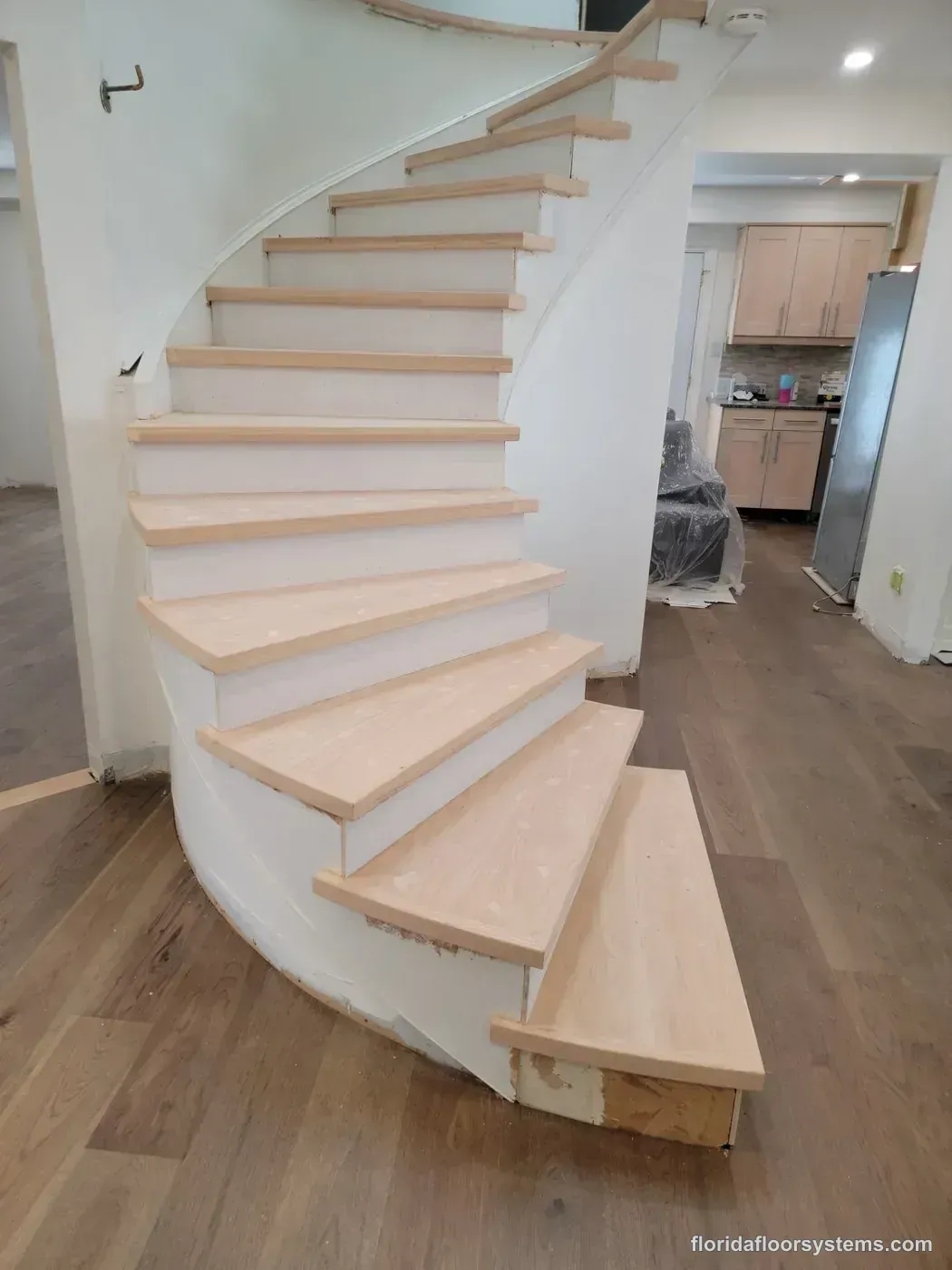
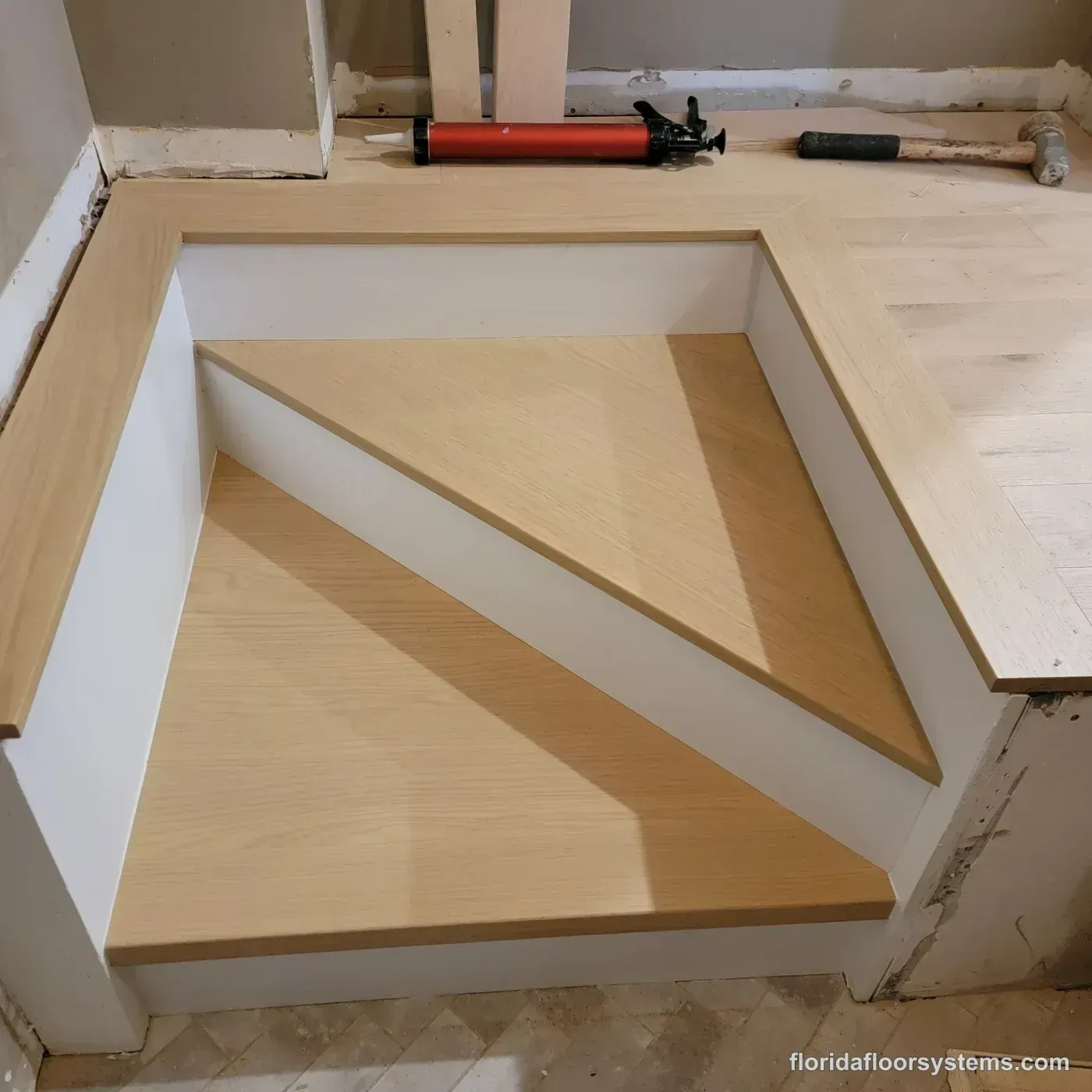
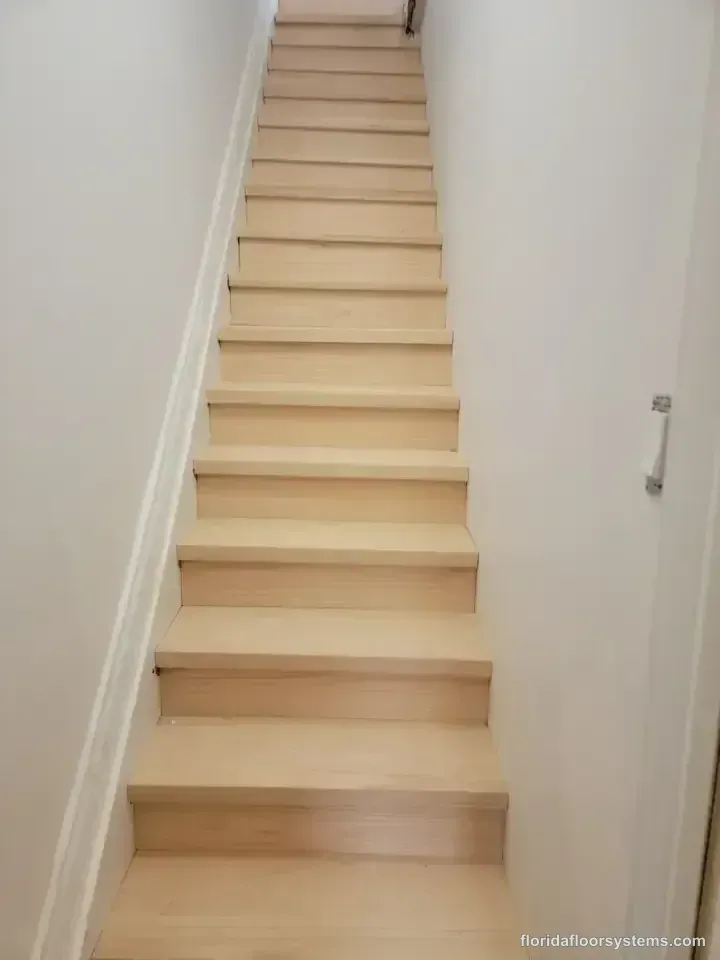
A straight run is the simplest. Winder steps (the ones that turn), curves, open sides and rounded first steps each need their own measurements, and some need a paper or card pattern.
Risers can be wood like the treads or painted white for contrast. On an open side with no railing standing on the steps, the end of the tread is wrapped so no raw edge shows. The floor of the landing is laid to match the hall.
Nosing
The edge: flush or overlap
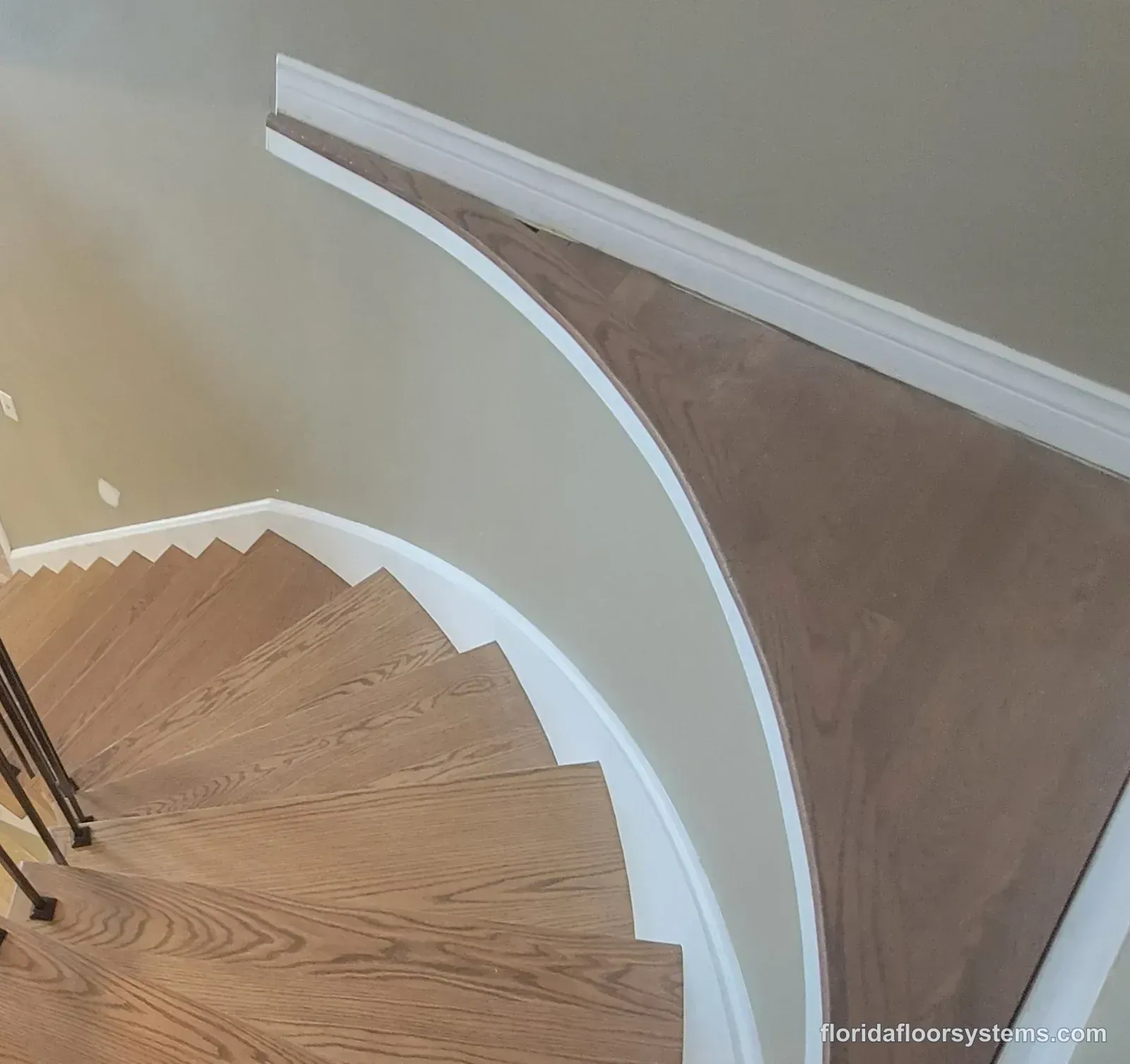
The nosing is the rounded front of a step or landing, also called a bullnose. It takes the weight of every footfall, so it is glued and fastened firmly. A loose one is a trip hazard.
Flush nosing sits level with the floor and looks built in. It is common with hardwood and glue-down floors.
Overlap nosing rests slightly over the floor. It is used with floating floors, which need room to move. Vinyl and laminate need a nosing too, and most makers sell a match.
On turning steps and curved landings, nosing is cut to the bend so the line runs clean around the turn.
Matching
Make the stairs belong to the floor
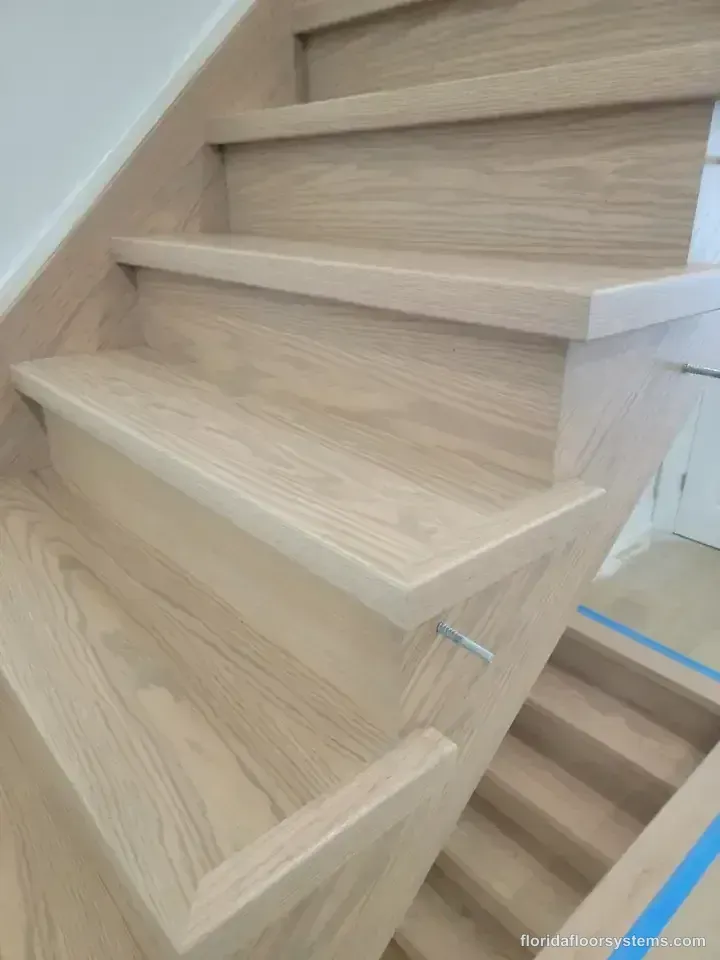
Treads come prefinished, or they are finished on site to match the boards upstairs and down. Nosing is made in the same species, color and sheen, or milled from the flooring itself.
Bring a piece of the floor, or a sample of the one you plan. Doing the floor and the stairs together is the surest way to one color.
A herringbone or plank floor can meet the stair cleanly when its layout is planned with the top nosing in mind.
Price
What affects the price of a stair conversion
- How many steps there are, and their shape: straight, turning, curved, open on one side
- Recapping or new treads, and the wood you choose
- Prefinished wood or finishing on site, plus painted risers
- Landings, nosing and the joint with the floor upstairs
- Loose steps and squeaks, fixed before the new wood goes on
After the visit you get a written quote with the full scope. New installations come with a 12-month warranty on our installation labor.
Carpet-to-hardwood questions
Can carpeted stairs be changed to hardwood?
In most cases, yes. We look at the steps under the carpet to see if hardwood caps fit over them or if new treads are the better route.
Do I need to replace the whole staircase?
Usually not. Stair recapping keeps the stair you have and covers it with new wood, which also costs less than starting over.
How long does it take?
A typical straight stair takes a few days. Curves, landings and finishing on site add time. Your written quote lists the work days.
Are hardwood stairs slippery?
A matte or satin finish is less slippery than gloss. A runner can be added later if you want more grip.
Can you work on curved or turning stairs?
Yes. Where a stair turns or changes shape, each tread and nosing is measured on its own.
Do you replace the railing too?
No. We work on treads, risers, nosing and the floor of the landing. If your railing stands on the steps, send a photo first: taking it off and setting it back is a job for a licensed contractor.
Free quote
Ready to lose the carpet?
Send a photo from the bottom, one from the top, and the number of steps. Tell us which floor the stairs should match.
- Free on-site estimate
- Written quote with clear options
- Based in Boca Raton
- Calls answered 24/7
- Led by master installer Alexander, 30 years of experience